LAKE TAHOE, Calif./Nev., Sep. 1, 2023 – Headed to the Tahoe Basin for one last summer camping trip? Black bear biologists who work in the Tahoe Basin every day have some advice and thoughts to share.
When you choose to visit the Lake Tahoe Basin, you are headed to the heart of bear country when the Tahoe Basin’s black bears will be especially active and persistent in their search for food to prepare for leaner times ahead in the fall and winter. Sometimes, the easiest food for them to find is human food and garbage.
“Anyone coming to the Tahoe area needs to educate themselves on bear behavior and general bear ecology. There are a lot of bears here and those bears have an incredibly strong sense of smell and a strong desire for food that intensifies at different times of the year, particularly in the fall with the onset of hyperphagia,” said Alexia Ronning, an environmental scientist with the California Department of Fish and Wildlife (CDFW) and one of three bear biologists hired recently by CDFW and assigned full-time to the Tahoe Basin to help prevent and mitigate human-bear conflicts.
Hyperphagia is the biological instinct for bears to fatten up for the winter, which drives them to consistently feed and search for food.
“Read and follow all the camp rules about bears when you arrive and take them seriously,” Ronning said. “If you do have an incident – whether it’s a bear getting into your car or getting into food at your campground – report it to your camp host or the proper government agency.”
Ronning encourages Tahoe Basin campers and visitors to pack a few specialty items to keep them safe while enjoying the outdoors and to help keep the Tahoe Basin’s bears from getting too close and comfortable around people, which is often the source of escalating human-bear conflicts. Conflicts are most likely to occur in settings where human food and garbage are present, such as campgrounds.
“You can carry bear spray. That makes a lot of people feel safer. You need to remember to spray it downwind. Be sure to educate yourself on how to use it before heading out camping,” Ronning explained. “Bring an air horn and a whistle or you can bang pots and pans. Those noises will help scare a bear to a safer distance and the noise will also warn fellow campers and hikers that a bear is nearby.”
Alyson Cheney is another environmental scientist hired by CDFW in the spring as a full-time bear biologist and human-wildlife conflict specialist in the Tahoe Basin.
Proper food storage is a consistent problem Cheney has seen from campers all summer in the Tahoe Basin.
“People assume their ice chests are bear-proof, but in most cases, they are not,” she said. “If they can’t be locked or latched securely with no way to pry a gap between the lid and the cooler, they need to go into a bear box. You need to have all the equipment to store your food properly whether that’s a bear-proof canister for the backcountry or a bear-resistant ice chest for the campsite.
“Once a bear gets a food reward it is more likely to come back,” Cheney continued, “so taking those preventative measures is the best way to keep you, your family and your fellow campers safe.”
Kyle Garrett is the third member of CDFW’s newly assembled Tahoe Basin bear team. Another environmental scientist, Garrett worked with black bears and grizzly bears in Montana, Idaho, and Wyoming before joining CDFW this past spring to help with the Tahoe Basin’s human-bear conflicts.
Garrett said ice chests and coolers offer campers a false sense of security that their food is properly stored. He has seen bears carry off $300 and $400 coolers they couldn’t immediately get into.
“In the Tahoe Basin, you can encounter a bear in a campground, in the backcountry and even a neighborhood. So, all of the best bear practices need to be followed all of the time whenever you are here,” he said.
One common problem Garrett sees in the Tahoe Basin is conscientious campers using bear boxes for food storage and bear-proof dumpsters for garbage but not closing them securely. Therefore, he reminds everyone that “they have to be latched properly to be functional.”
Visitors to the Lake Tahoe Basin can play a key role in helping keep bears wild by practicing these strategies and being extra vigilant as bears approach the hyperphagia period.
For more tips and information about bear-safe camping, please see the following video from California State Parks and visit CDFW’s Keep Me Wild/Sharing Space Outdoors webpage.
Use the following phone numbers and online resources to report a bear incident or conflict while camping or visiting the Tahoe Basin:
- In California, contact CDFW at (916) 358-2917 or report online using the Wildlife Incident Reporting (WIR) system at apps.wildlife.ca.gov/
- Non-emergency bear collisions in California State Parks can be reported to its public dispatch at (916) 358-1300
- In Nevada, contact NDOW at (775) 688-BEAR (2327)
- If the issue is an emergency, call the local sheriff’s department or 911.
Learn more about keeping Tahoe bears wild at TahoeBears.org and BearWise.org.
Video Link: https://www.youtube.com/watch?v=dICg4q3TU8o
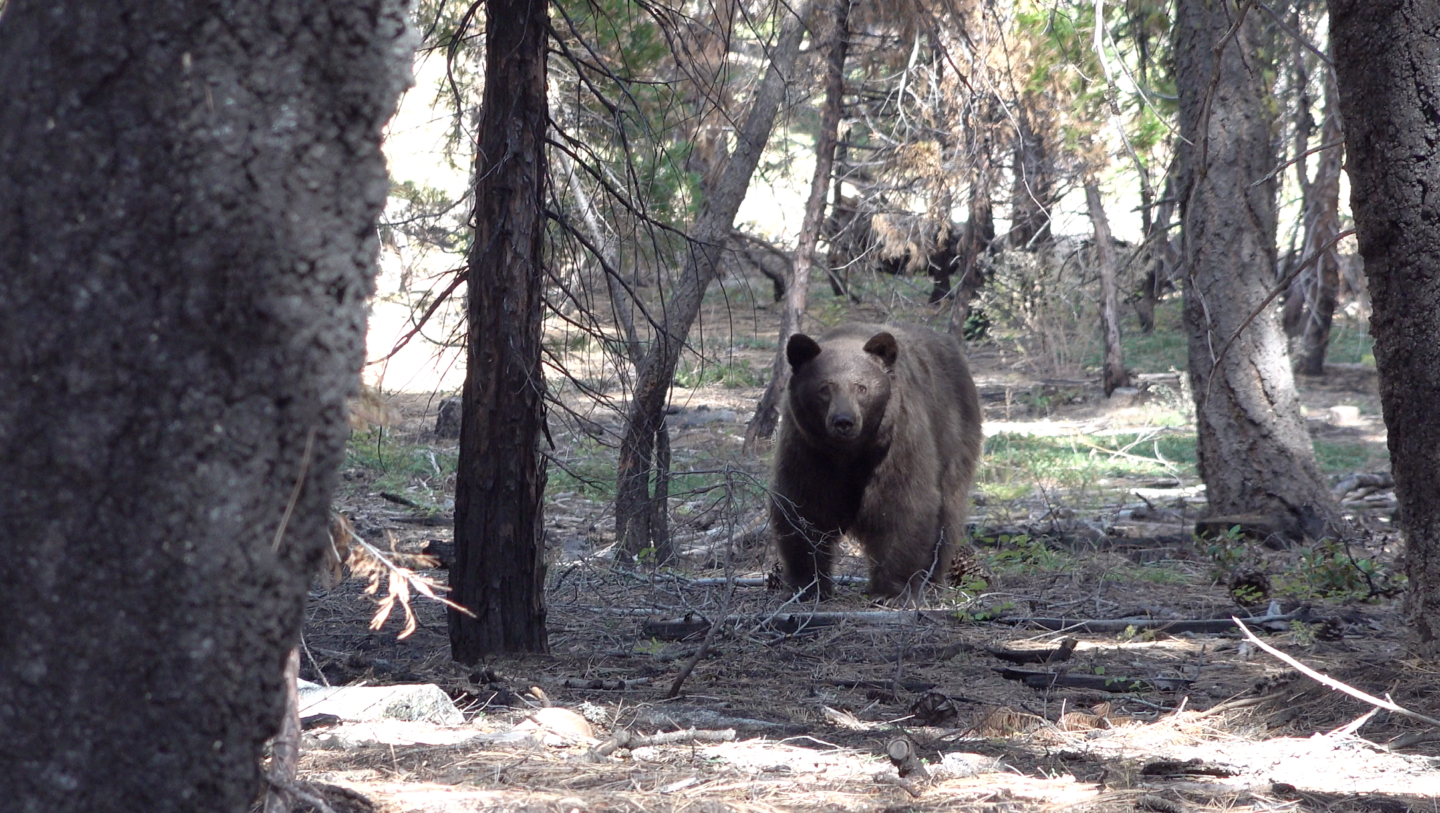
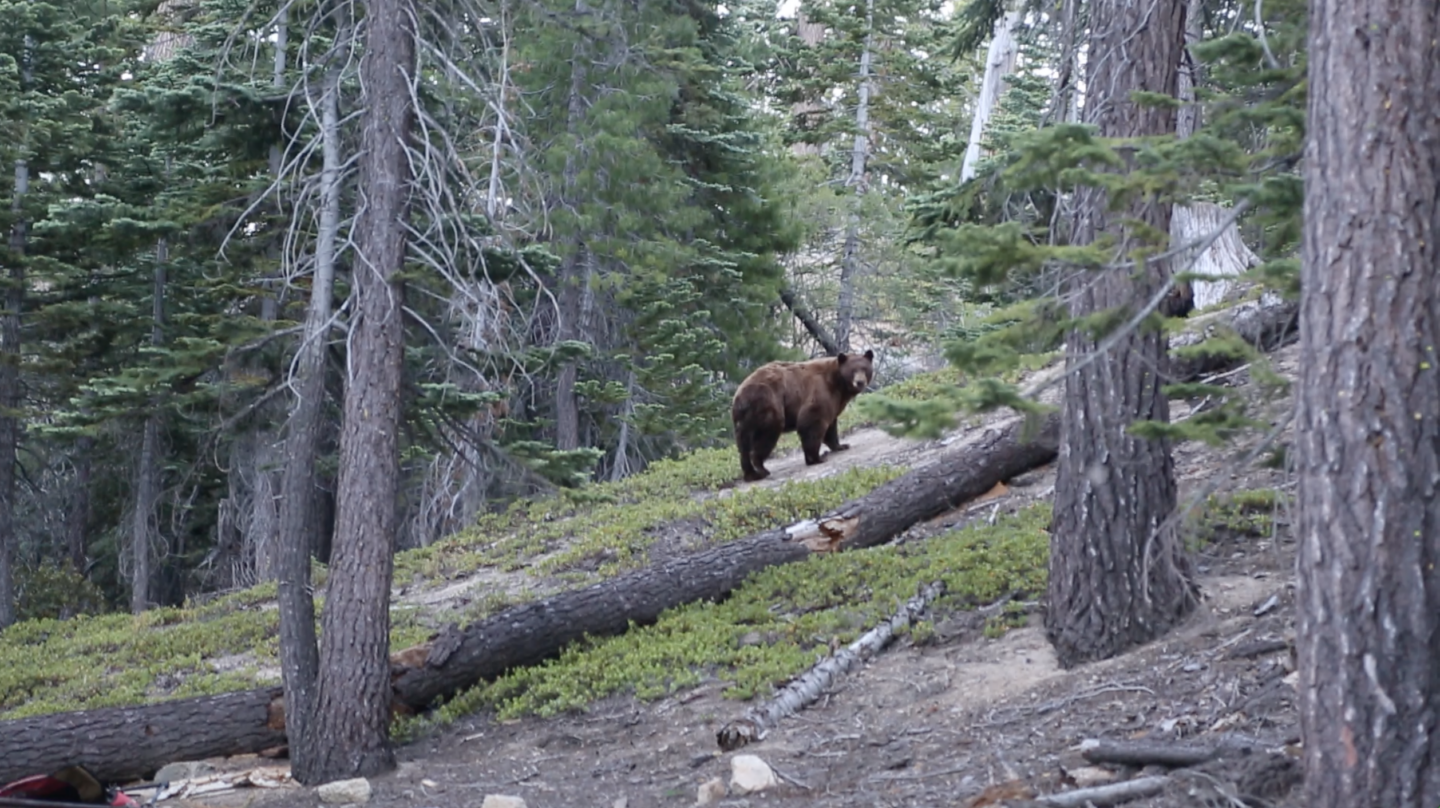
Photo captions: Visitors to the Lake Tahoe Basin can play a key role in helping to Keep Tahoe Bears Wild by properly storing food and garbage. Photo credit: California Department of Fish and Wildlife.